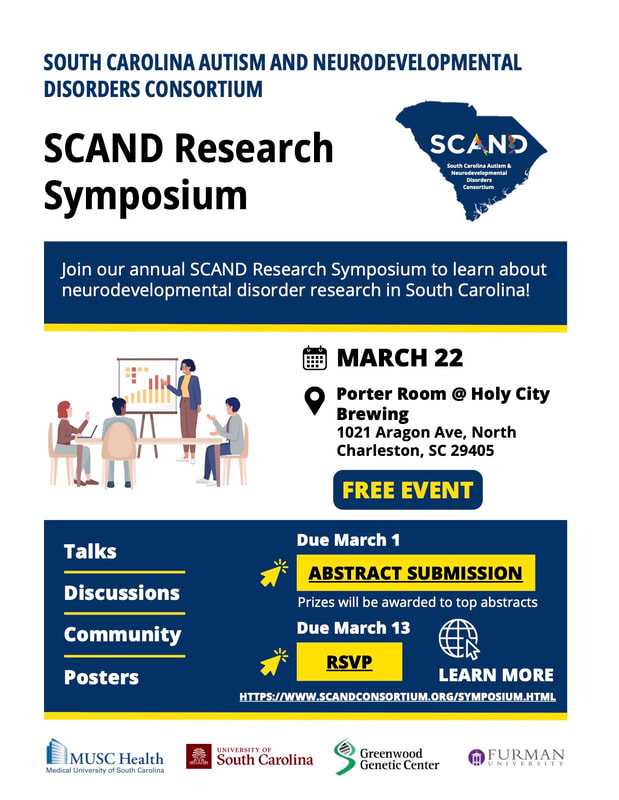
Februrary 27, 2026: Columbia, SC
The SCAND symposium is a free research conference that provides an opportunity for researchers across the state to learn about science targeting autism and neurodevelopmental disorders within South Carolina. Our annual meeting often includes:
Held at the Riverbanks Zoo & Garden, Botanical Garden, 500 Wildlife Parkway, Columbia SC 29210
- Regional speakers
- Invited speakers
- Poster session targeted for trainees (undergraduate and graduate students, staff, post-docs, etc.)
- Opportunities to network/socialize with researchers
Held at the Riverbanks Zoo & Garden, Botanical Garden, 500 Wildlife Parkway, Columbia SC 29210
Registration
You must register to attend this free research conference. The registration link will close at end of day February 12, 2026.
SCAND 2026: Registration – Fill out form
Please note: there is a separate link to upload abstracts (see below)
SCAND 2026: Registration – Fill out form
Please note: there is a separate link to upload abstracts (see below)
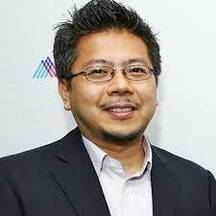
Keynote Speaker - Dr. Matthew Mosconi
Title:
Understanding the extreme variability in brain, cognitive and motor aging among FMR1 premutation carriers
Biography: Dr. Mosconi is a professor in the Clinical Child Psychology Department, director of the Kansas Center for Autism Research and Training and associate director of the Life Span Institute at the University of Kansas. His research is focused on cognitive and motor development in neurodevelopmental conditions, including autism and fragile X-related conditions. Mosconi’s studies aim to understand biological factors that contribute to or predict the wide range of abilities and challenges experienced by individuals with these conditions. He completed his Ph.D. in Clinical Psychology and a clinical internship at the University of North Carolina – Chapel Hill. He performed postdoctoral training in developmental cognitive neuroscience and pediatric neuropsychology at the University of Illinois in Chicago, where he also served as a faculty member. Mosconi then served on the faculty at the University of Texas Southwestern Medical Center before moving to the University of Kansas. His work has been supported by the National Institutes of Health, the Department of Defense and many others.
Understanding the extreme variability in brain, cognitive and motor aging among FMR1 premutation carriers
Biography: Dr. Mosconi is a professor in the Clinical Child Psychology Department, director of the Kansas Center for Autism Research and Training and associate director of the Life Span Institute at the University of Kansas. His research is focused on cognitive and motor development in neurodevelopmental conditions, including autism and fragile X-related conditions. Mosconi’s studies aim to understand biological factors that contribute to or predict the wide range of abilities and challenges experienced by individuals with these conditions. He completed his Ph.D. in Clinical Psychology and a clinical internship at the University of North Carolina – Chapel Hill. He performed postdoctoral training in developmental cognitive neuroscience and pediatric neuropsychology at the University of Illinois in Chicago, where he also served as a faculty member. Mosconi then served on the faculty at the University of Texas Southwestern Medical Center before moving to the University of Kansas. His work has been supported by the National Institutes of Health, the Department of Defense and many others.
Research program: Dr. Mosconi's research examines sensorimotor, cognitive and brain development in autism spectrum and related intellectual/developmental disorders. He also currently is conducting studies on neurodegenerative disorders characterized by deterioration of sensorimotor skills, such as Fragile X-associated tremor/ataxia syndrome (FXTAS). The aim of this research program is to determine the brain mechanisms that contribute to sensorimotor and cognitive impairments in developmental disorders. This knowledge then may be used for multiple purposes: 1) To identify new behavioral and brain targets for the development of more precise and effective therapeutic approaches; 2) To generate translational biobehavioral markers that can measured in clinical trials validating new treatment approaches, and; 3) To create biobehavioral measures that may assist in more reliable identification approaches. Dr. Mosconi's studies integrate quantitative behavioral measurements, neuropsychological assessment, and systems neuroscience techniques including functional MRI, diffusion tensor imaging (DTI), electromyography (EMG), electroencephalography (EEG), kinematic and kinetic analysis and oculomotor recording.
Symposium Topics
We are planning two symposium sections - one will feature new faculty to engage with institutions across the state. The other symposium will involve be thematically centered on anxiety. More details to come as we plan talks from faculty and trainees.
|
Panel with new SCAND faculty will include talks from:
|
Sessions on anxiety will include talks from:
|
Research Posters
Abstract submission link: SCAND 2026: Abstract submission – Fill out form
Abstract submissions will be open until end of day on January 15, 2025.
Abstracts should consist of a brief background, objective, method, results, and conclusion. You will be asked to paste your abstract into a open text field.
Any SCAND researcher and/or lab member (e.g., student, postdoc, staff) may submit an abstract.
SCAND faculty will review trainee abstracts and nominate top abstracts for awards.
Abstract submissions will be open until end of day on January 15, 2025.
Abstracts should consist of a brief background, objective, method, results, and conclusion. You will be asked to paste your abstract into a open text field.
Any SCAND researcher and/or lab member (e.g., student, postdoc, staff) may submit an abstract.
SCAND faculty will review trainee abstracts and nominate top abstracts for awards.
Draft Agenda
- 8:00 am: Symposium Registration, Poster Set-up, and Continental Breakfast
- 8:30 am: Welcoming and Opening Remarks
- 8:35 am: Updates from across the state (GGC, Clemson, MUSC, USC)
- 9:05 am: Symposia Session #1
- 10:00 am: Networking coffee break
- 10:20 am: Symposia Session #2
- 12:00 pm: Lunch and networking
- 1:00 pm: Poster session
- 2:15 pm: Trainee talks
- 3:00 pm: Keynote Speaker
- 4:00 pm: Networking Happy Hour
- 4:45 pm: Concluding Remarks/Poster Awards
Directions
This meeting will be held at the Riverbanks Zoo & Garden, Botanical Garden: 1300 Botanical Pkwy, West Columbia, SC 29169
More information on directions and parking, coming soon!
|
From Charleston, SC
|
From Greenville or Greenwood, SC
|
Details about Columbia
Staying in Columbia? See the Columbia Visitor Guide as a starting point!